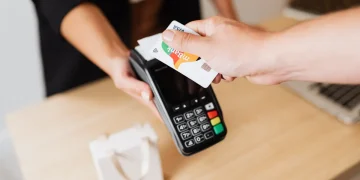


Velera has launched a new suite of credit union BNPL offerings that spans both sides of the card relationship, adding Debit Flex Payments and enabling Apple Pay’s Pay with Installments for participating institutions. Which leaves an obvious question: if nearly half of credit union members are already using buy now, pay later (BNPL) through external providers, how quickly can credit unions reclaim those moments?
From Checkout Convenience to Everyday Money Management
BNPL started life as a way to spread the cost of larger purchases, a sort of digital reinvention of layaway. That framing has largely expired. Adam Hodz, Managing Vice President of Payment and Channel Solutions at Velera, put it plainly in a recent PaymentsJournal podcast: ‘It’s an evolution from a financing option for large purchases into everyday money management. The buy now, pay later conversation is shifting from, “Can consumers finance and purchase?” to consumers expecting flexibility in all transactional situations. Whether it’s online or in-store, they want that flexibility.’
The data bears that out. A significant share of BNPL transactions are now for everyday purchases under $30, and some consumers use these products on a weekly basis. That pattern matters for credit unions because it reframes BNPL not as an occasional borrowing tool but as infrastructure for routine budgeting and cash flow. Missing from that infrastructure is a problem, not just a gap in product range.
Ben Danner, Senior Debit Analyst at Javelin Strategy and Research, highlighted the relationship dimension in the same podcast. ‘It’s a way to be there at the point-of-sale with an option that your customers are looking for, but it’s also this unified banking experience with your own branding,’ he said. ‘Financial institutions have built up these relationships over many years and they’ve developed a strong sense of trust with their customers, particularly credit unions.’
What Credit Unions Stand to Lose, and Gain
When a BNPL transaction happens through a fintech or merchant-owned provider, the credit union loses more than a single payment. It loses visibility into member behaviour, misses an engagement touchpoint, and forfeits the data that might otherwise inform personalised offers or loyalty programmes. Hodz framed the risk directly: ‘When a fintech or merchant-owned buy now, pay later provider owns that interaction, it gains visibility into member behavior, captures engagement, and builds habits that can gradually shift the financial relationship away from the credit union.’
A study by Velera found that nearly half of credit union members already use BNPL via providers outside their financial institution, while 38% said they would be likely to use a BNPL solution offered by their own credit union. That gap is the commercial opportunity. Credit unions are not starting cold: they already carry the trust that fintechs have spent years and considerable marketing spend trying to manufacture.
‘Unlike fintechs or merchant providers, credit unions are not starting from a purely transactional relationship,’ Hodz said. ‘They already have that relationship, and the credit union philosophy is driven by trust and service and financial well-being.’
Fintechs, meanwhile, are no longer niche. Many now offer deposit accounts, debit cards, and other products that sit squarely in territory credit unions consider their own. The competitive pressure is structural, not cyclical.
Velera’s Credit Union BNPL Offerings: Debit, Credit and Apple Pay
The expanded Velera suite addresses both sides of the card relationship. On the debit side, Debit Flex Payments allows members to split purchases into short-term instalments in real time, as confirmed by Credit Union Times. Danner pointed to why debit-based BNPL matters in particular: ‘It provides access to lending solutions for your customers that also might not qualify for credit products and opens the door for them, or perhaps for those customers that don’t want to sign up for yet another credit card.’
He also flagged the generational angle. ‘Buy now, pay later is also something that’s attractive to the next generation of cardholders (your younger generations and your Gen Z) and pretty much all of the data shows that. These tend to also be very debit-heavy populations.’ Embedding BNPL within the debit experience means meeting those members where they already transact, rather than asking them to adopt a separate product or app.
On the credit side, Velera has enabled Apple Pay’s Pay with Installments, which brings financing options directly into the checkout flow at more than 90% of US retailers. Members can view and select instalment options during an Apple Pay transaction before completing their purchase. That shifts credit unions from post-purchase instalment offers (which arrive after the moment of decision) to being present at checkout itself.
‘That changes the game because credit unions can move from reacting after purchase to being present at the point of decision,’ Hodz said. The suite also allows credit unions to set their own qualification standards, repayment terms, and underwriting parameters, keeping the product within the institution’s broader risk and relationship framework rather than outsourcing it to a third party’s logic.
With Velera’s expanded credit union BNPL offerings now live across both debit and credit rails, the next test is take-up: whether enough credit unions move quickly enough to close that 38% opportunity before the fintechs widen the gap further.