

iPronics has closed its iPronics Series B funding round at $125 million, with the Spanish spinout aiming to scale its programmable optical networking technology for AI data centres. Which leaves an obvious question: in a market where everyone is chasing AI infrastructure spending, what exactly does iPronics have that others don’t?
Who backed the iPronics Series B funding round
The round was co-led by Maverick Silicon and Light Street Capital. Nvidia also joined the round, according to iPronics, alongside a broader group of investors. The presence of Nvidia alongside dedicated semiconductor-focused backers like Maverick Silicon gives the raise a particular texture: this isn’t just capital, it’s a signal of where some of the most strategically positioned players in the AI hardware space think optical networking is heading.
Christian Dupont and Dr. Daniel Pérez-López lead the company, according to FinSMEs. iPronics itself is a spinout from the Universitat Politècnica de València, grounding it in a European academic lineage at a time when sovereign AI infrastructure is attracting growing political and commercial interest.
What the money is for
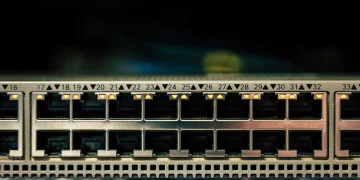
The company’s flagship product is the iPronics ONE, a rack-mounted optical switch with integrated control, telemetry and APIs, according to FinSMEs. That combination matters in practice: optical switches that lack the software layer for programmability tend to require significant additional integration work before they slot into a modern data centre stack. The iPronics ONE is designed to arrive closer to plug-and-play, at least in principle.
The broader technology iPronics is commercialising sits in the category of programmable optical networking, which addresses a specific bottleneck in AI infrastructure. As AI workloads grow in scale, the interconnects between compute nodes become a constraint. Optical switching offers higher bandwidth and lower latency than conventional electrical alternatives, and the ability to reconfigure those connections in software adds flexibility that static optical architectures cannot match.
The Series B funding is intended to push that technology from early commercial deployments toward wider adoption across AI data centres. Scaling commercialisation in hardware is expensive: the gap between a working product and one that can be manufactured, supported and integrated at volume tends to swallow capital quickly. A $125m round gives iPronics meaningful runway to navigate that phase.
Context: optical networking’s moment
iPronics is not alone in betting that AI infrastructure spending will flow toward optical interconnects. The sector has seen increased activity as hyperscalers and co-location operators grapple with the energy and bandwidth demands of large-scale AI training and inference. What iPronics is trying to demonstrate is that a programmable, software-controlled approach to optical switching is the right architecture, not just a faster version of existing solutions.
The Nvidia participation in the round is worth dwelling on. Nvidia’s position in AI infrastructure gives it visibility into where the hardware constraints are emerging across its customers’ deployments. An investment in optical switching infrastructure suggests the company sees that layer of the stack as one worth backing directly, rather than leaving to others to figure out.
For European deep tech, the raise is also a data point. Spinouts from southern European universities have historically found it harder to attract the kind of growth capital that funds the commercialisation gap. A $125m Series B co-led by US-based specialist investors, with Nvidia alongside, represents a different kind of outcome than most comparable companies in the region have managed.
iPronics said the funding will support scaling its programmable optical networking for AI data centres, with the iPronics ONE at the centre of that commercial push.