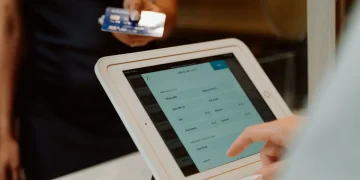


The Walmart Apple Pay rollout began on 24 August, with the retailer confirming it will accept contactless payments, including Apple Pay and Google Pay, at select Walmart and Sam’s Club locations, according to TechRepublic. Which leaves an obvious question: what happens to Walmart Pay?
How the Walmart Apple Pay rollout is being phased
The state-by-state schedule starts with Arkansas, with West Coast markets expected to follow in early September. The rest of the country will come online in phases through the end of the year. Fuel pumps are expected to be covered by the middle of 2027. The upgraded point-of-sale terminals will handle Apple Pay, Google Pay, Samsung Pay, contactless credit and debit cards, and contactless EBT cards.
Walmart has already accepted Apple Pay at its Canadian stores for six years, so the infrastructure thinking is not new. What is new is the scale of the US commitment, and what it means for the proprietary payment option the retailer has defended for a decade.
The data question at the centre of Walmart Pay
Walmart Pay, unveiled in December 2015, was built around a QR code that customers scanned in the app at checkout. That mechanism gave Walmart something valuable beyond the transaction itself: visibility into shoppers’ spending habits and schedules. Apple Pay and Google Pay do not hand that data back to the retailer. Walmart insists the move to accept tap-to-pay rivals does not mean it is abandoning Walmart Pay, and the system will remain available to shoppers.
But the practical picture is harder to argue with. Walmart Pay requires downloading an app and adding a payment card, usable only at a single merchant. Rather than becoming a convenient option, it became a friction point. With tap-to-pay now accepted in store, most customers are unlikely to reach for the QR code when their phone or card will do the same job faster.
The service does still offer features that tap-to-pay cannot replicate directly: electronic receipts, Walmart fuel savings, and integration with the broader app ecosystem. Sam’s Club, a Walmart subsidiary, has its own Scan & Go feature, which lets members scan and pay while they shop. Sam’s Club has also begun accepting Apple Pay and Google Pay at select locations.
Apple Pay’s footprint makes Walmart’s hold-out position harder to sustain
Walmart has long been the largest US retailer not accepting Apple Pay, which launched in 2014. Apple Pay is now accepted at roughly 85% of US retailers, according to figures compiled by Apple. That left Walmart as an increasingly conspicuous outlier, and the pressure on shoppers who expected tap-to-pay everywhere was building.
The scale of what Walmart is now joining is worth holding in mind. According to Cropink, Apple Pay counts 785 million users worldwide and holds a 54% share of US in-store mobile wallet usage. It also processes 14.2% of online consumer payments. Those figures give some sense of why Walmart’s earlier attempt to route around Apple Pay ultimately failed.
That earlier attempt had a name: CurrentC, a merchant consortium Walmart helped establish, conceived as a network to rival Apple Pay. It collapsed in 2016. Walmart Pay then carried the baton internally, but with a much narrower scope. The December 2015 launch came with reports that Walmart had held discussions with Apple about incorporating Apple Pay into its own app, though nothing came of those talks.
The broader context is one of consumer habit. Tap-to-pay has become the default expectation at the checkout, and holding out against it costs retailers in a different way than it once did: not just in convenience complaints, but in the implied message that the shopping experience is slightly behind.
Walmart is clearly aware of that. The question now is whether Walmart Pay finds a compelling reason to exist alongside the more widely adopted alternatives, or whether the features it offers quietly become less of a draw as tap-to-pay becomes the frictionless norm in every aisle. The rollout reaching fuel pumps by mid-2027 will be a useful moment to take stock.