

A new agreement between Türkiye and London is set to widen international cooperation on climate action, with a book on polar research and a formal partnership with London Climate Action Week both unveiled in August as Türkiye prepares to host COP31.
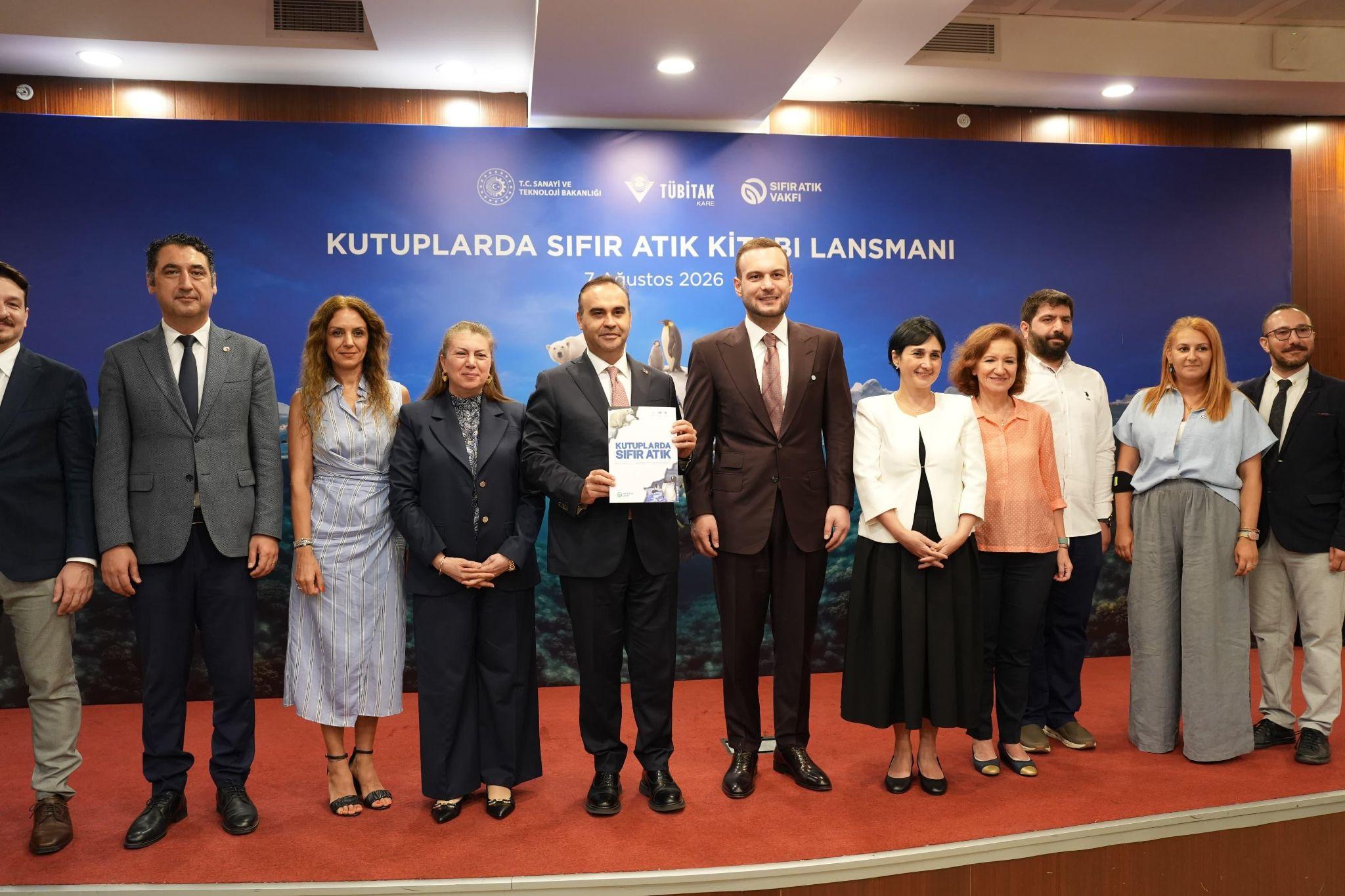
The developments centre on The Zero Waste Foundation, which has spent the month building bridges between Türkiye’s scientific research programmes and London’s international climate network. On 7 August, the Foundation launched a book titled “Zero Waste in the Polar Regions”, produced in partnership with the Polar Research Institute of TÜBİTAK, the Scientific and Technological Research Council of Türkiye. Ten days later, on 17 August, the Foundation signed a cooperation protocol with London Climate Action Week covering climate action, zero waste and the circular economy.
For readers in the UK, the significance lies less in the technical detail of polar science and more in what the agreement signals: a growing institutional link between Türkiye and London’s climate diplomacy scene in the run-up to COP31, the UN climate summit that Türkiye is due to host.
A book that joins two national projects
Mehmet Fatih Kacır, Minister of Industry and Technology of Türkiye, said the book brought together two major national initiatives that both began in 2017. “The Zero Waste initiative launched under the leadership of H.E. Emine Erdoğan has grown step by step from a national initiative into a global one,” he added.
“At the same time, we began organising scientific expeditions to Antarctica and the Arctic under the auspices of the President of the Republic of Türkiye, enabling Turkish scientists to strengthen the country’s presence in polar research. Through this book, these two initiatives have come together.”
The publication itself draws on the work of 18 scientists who have taken part in Turkish polar expeditions, examining climate change, environmental pollution and zero waste practices across the Arctic and Antarctic through scientific data. Rather than focusing purely on waste collection, the book looks at how research trips are planned from the outset, how materials and resources are used, and how energy, water and logistics are managed once teams are in the field. The underlying aim, according to the Foundation, is to reduce waste before it is created and to limit the environmental footprint of scientific activity in some of the world’s most sensitive regions.
The book frames the polar regions as key indicators of global climate change, arguing that environmental shifts recorded there carry consequences well beyond the Arctic and Antarctic themselves. It also reflects the broader zero waste vision associated with H.E. Emine Erdoğan, who founded the Zero Waste Movement, chairs the UN High-Level Advisory Board on Zero Waste and serves as Honorary President of the Zero Waste Foundation.
The London protocol and what it commits both sides to
The second, and for a UK audience arguably more immediately relevant, development is the cooperation protocol signed with London Climate Action Week. The agreement establishes an institutional partnership between the Zero Waste Foundation and the London-based event, intended to strengthen knowledge exchange, joint initiatives and international dialogue on zero waste and circular economy approaches.
The protocol was signed by Samed Ağırbaş, President of the Zero Waste Foundation and COP31 High-Level Climate Champion, and Nick Henry, Climate Action Founder and CEO. Ağırbaş said: “After this cooperation protocol, I hope we will carry out strong work and organize joint events at COP31 and London Climate Action Week.”
London Climate Action Week brings together representatives from government, cities, business, finance, academia, civil society and local communities, making it one of the more prominent fixtures on the international climate calendar. By formalising ties with that network, the Zero Waste Foundation gains a direct route into London’s climate ecosystem, while organisers of the London event gain access to Türkiye’s experience in zero waste and circular economy policy, including the research reflected in the newly launched polar book.
COP31 as the backdrop for closer cooperation
Both developments are unfolding against the backdrop of COP31, which Türkiye is preparing to host. The summit gives the cooperation a wider diplomatic context, even though the Foundation has stressed that its immediate priority is practical exchange with the London Climate Action Week network rather than the summit itself.
Taken together, the polar research book and the London protocol illustrate an approach that treats zero waste as more than a recycling or waste management exercise. Instead, the emphasis is on resource efficiency and reduced environmental impact across scientific research, industry and international policy alike, whether that research is being carried out in the Antarctic or discussed in a London conference hall.
For a UK readership, the story sits at the intersection of two familiar concerns: how international climate cooperation is structured ahead of major summits, and how far-flung scientific work, in this case Turkish-led polar expeditions, can inform practical policy discussions much closer to home. With COP31 on the horizon and London already positioned as a hub for climate dialogue through events such as London Climate Action Week, the newly signed protocol suggests that link between Ankara and London is likely to feature more prominently in the months ahead.